Certificate Attestation in Delhi: Process, Documents and Common Mistakes
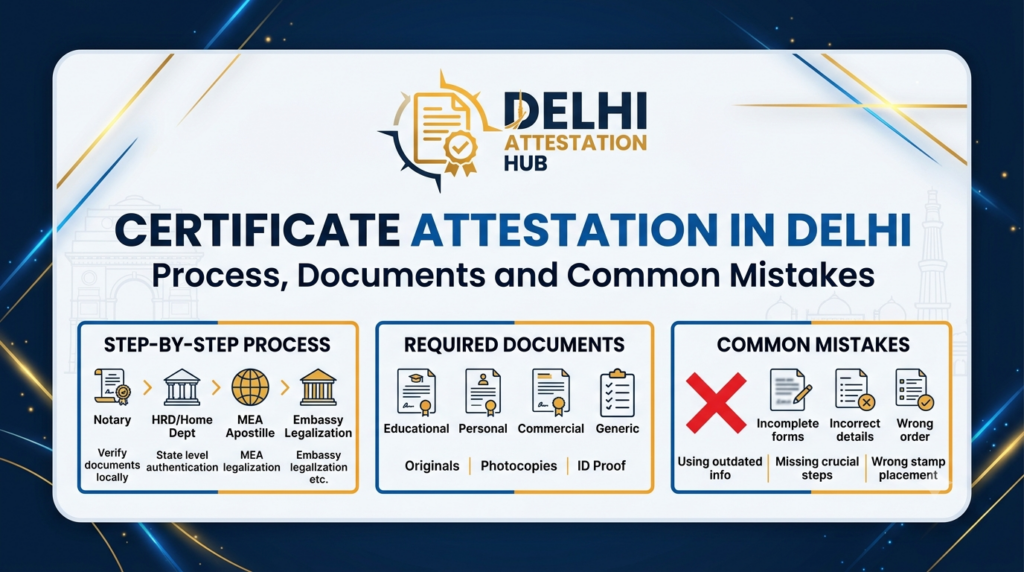
When Indian certificates need to be submitted to a foreign employer, university, immigration authority or government department, document authentication may be an important part of the preparation process. Understanding the correct procedure before submitting your paperwork can help prevent avoidable delays and repeated visits.
For applicants researching certificate attestation in Delhi, the first step is to identify the document type, the country where it will be used and the purpose of submission. These factors determine which authentication or legalisation procedure may apply.
This article explains how certificate attestation works, which documents may require authentication, what applicants should prepare and how to avoid common application problems.
Why Do Indian Certificates Need Attestation?
A certificate issued in India may need authentication before an organisation abroad accepts it. The process helps establish the authenticity of the document or the origin of the relevant official signature, depending on the procedure involved.
For example, an overseas employer may request authenticated educational documents before completing recruitment formalities. A university may require verified academic records for admission, while a foreign authority may ask for an authenticated birth or marriage certificate for an immigration application.
The exact requirement depends on the receiving authority and destination country. Applicants should confirm the instructions provided by the organisation requesting the document instead of assuming that every certificate follows the same process.
Which Documents May Require Certificate Attestation?
The documents that require authentication vary according to the applicant’s circumstances and the intended use of the paperwork.
1. Educational Certificates
Educational documents may need authentication for overseas employment, higher education, professional registration or other official purposes.
Common examples include:
- Degree and postgraduate certificates
- Diploma certificates
- School-leaving and secondary education certificates
- Academic records and other supporting educational documents
Applicants should verify whether the receiving organisation requires the original certificate, a transcript or additional supporting paperwork.
2. Personal Documents
Personal documents may require authentication for family immigration, overseas registration and other administrative procedures.
Examples include:
- Birth certificates
- Marriage certificates
- Affidavits
- Powers of attorney
- Other personal documents requested by a foreign authority
The required procedure can differ according to the document and its issuing authority. Applicants should confirm the applicable requirements before arranging document submission.
3. Employment and Other Supporting Documents
Some overseas applications require supporting records in addition to educational certificates. These may include experience certificates, employment-related documents or other records requested by an employer or government authority.
Not every supporting document automatically requires attestation. Check the specific document list provided by the receiving organisation before starting the process.
How Does Certificate Attestation in Delhi Work?
The procedure is not identical for every certificate. However, applicants can use the following steps to understand what they may need to do before submitting their documents.
Step 1: Confirm the Purpose and Destination Country
Identify why the document is being submitted and which country or organisation will receive it.
For example, documents for a university application may have different requirements from documents submitted for overseas employment or family immigration.
Ask the receiving organisation whether it requires an apostille, normal attestation, embassy legalisation or another form of authentication.
Step 2: Identify the Correct Authentication Route
India provides different procedures for apostille and normal attestation.
According to the Ministry of External Affairs (MEA), apostille is used for eligible documents intended for use in countries covered by the Hague Apostille Convention. Normal attestation applies to countries where apostille is not accepted.
The document type, issuing authority and applicable requirements must also be considered. Applicants should consult the official MEA instructions before deciding which procedure to follow.
Step 3: Prepare the Required Documents
Review the submission instructions carefully. Depending on the document and procedure, applicants may need the original certificate, a photocopy, passport details and supporting verification records.
Educational and personal documents can have different authentication requirements. Do not assume that a checklist for one certificate will apply to another.
Step 4: Complete the Required Preliminary Verification
Some documents need authentication by the designated state or other competent authority before they can proceed to the next stage.
The applicable verification route depends on the document category, issuing authority and procedure. Certain documents may also be eligible for processing through the MEA’s e-Sanad system.
Applicants should verify the current instructions for their particular document rather than treating one sequence of steps as universal.
Step 5: Submit the Documents Through the Applicable Channel
Once the preliminary requirements have been completed, submit the documents through the authorised channel specified for the relevant procedure.
Keep copies of the submitted paperwork and any acknowledgement or reference number provided. These records can be useful when checking application progress or responding to a request for additional information.
Step 6: Check the Completed Documents
After receiving the processed documents, check the relevant authentication details and confirm that the paperwork matches the receiving organisation’s instructions.
If the destination authority has requested a particular document format or additional legalisation, resolve that requirement before submitting the final paperwork.
What Should You Check Before Applying for Attestation Services in Delhi?
Before arranging attestation services in Delhi, review these practical points.
Document type: Confirm whether the document is educational, personal, commercial or another category.
Issuing authority: Check which authority issued the certificate and whether preliminary authentication is required.
Destination country: Establish whether the destination accepts apostille or requires normal attestation or another legalisation procedure.
Name and personal details: Compare the spelling of names and other identifying details across your documents. If you notice a discrepancy, ask the relevant issuing authority or service provider how it should be addressed.
Original documents: Confirm whether originals must be submitted and how they should be handled.
Additional requirements: Check whether the receiving organisation requires supporting documents, translations or a particular format.
Preparing these details in advance can help applicants identify missing information before submitting their paperwork.
Common Mistakes That Can Delay Certificate Attestation
Even when applicants understand the general process, a few overlooked details can create additional work.
Choosing the Wrong Procedure
Apostille and normal attestation are not interchangeable in every situation. The correct route depends on the destination country’s requirements and the document involved.
Submitting Incomplete Paperwork
Missing supporting documents or incomplete verification can prevent an application from progressing. Check the applicable instructions before submission.
Assuming Every Certificate Follows the Same Process
Educational certificates, birth certificates, marriage certificates and other records can require different preliminary steps. Use a checklist appropriate to the actual document.
Ignoring Name or Detail Mismatches
Differences in spelling, dates or other identifying details may prompt additional checks. Address discrepancies with the relevant authority before proceeding whenever possible.
Relying on Unverified Processing Estimates
Processing time may depend on document verification, the issuing authority, the applicable authentication route and the requirements of the destination country. Confirm the expected timeline for your specific case rather than relying on a universal estimate.
How Can Applicants Choose a Suitable Attestation Service?
When comparing providers for certificate attestation in Delhi, focus on whether they can explain the process applicable to your documents.
Consider asking these questions:
- Can the provider identify the appropriate authentication route for the destination country?
- What documents and preliminary verification are required?
- Which steps will the provider handle, and which steps must the applicant complete?
- What are the service charges, government charges and other applicable costs?
- How will documents be handled, and how can application progress be checked?
- What happens if an authority requests additional paperwork?
Clear answers to these questions can help applicants understand the service before handing over important documents. Verify any claims about authorisation, processing time or guaranteed acceptance rather than relying on marketing statements alone.
Getting Help With Certificate Attestation in Delhi
If you need help understanding the steps involved, begin by identifying the document you need to authenticate, the country where it will be used and the purpose of submission.
You can review the Delhi office information provided by Talent Attestation to explore its document attestation services and determine whether its assistance is appropriate for your requirements.
Before proceeding, confirm the applicable document checklist, service scope, fees and expected timeline for your specific case.
Learn more: Talent Attestation — Delhi Office
Frequently Asked Questions
1. What is certificate attestation?
Certificate attestation is part of a document authentication or legalisation process used to establish the authenticity of a certificate or relevant official authentication for use in another country. The precise procedure depends on the document, destination and intended purpose.
2. Which documents may require attestation in Delhi?
Educational certificates, birth certificates, marriage certificates, affidavits and other official records may require authentication, depending on the receiving authority’s requirements. Confirm the requirements for each document before submission.
3. Is apostille the same as embassy attestation?
No. Apostille and normal attestation or embassy legalisation are different procedures. Apostille is generally relevant to eligible documents intended for use in countries covered by the Hague Apostille Convention. Other destinations may require a different legalisation route.
4. How long does certificate attestation take?
There is no single timeline applicable to every document. Processing can depend on preliminary verification, the document category, the applicable authority and any additional requirements. Confirm the expected timeline for your particular case.
5. How can I prepare for attestation services in Delhi?
Identify the destination country and purpose, check the receiving organisation’s instructions, prepare the required documents and verify whether preliminary authentication is necessary. Resolve missing information or document discrepancies before submission where possible.
Official Reference
For current information about India’s document authentication procedures, consult the Ministry of External Affairs:
MEA — Attestation and Apostille
The applicable instructions should always be checked before submitting documents, as requirements can vary by document type, destination and intended use.